Tavolone
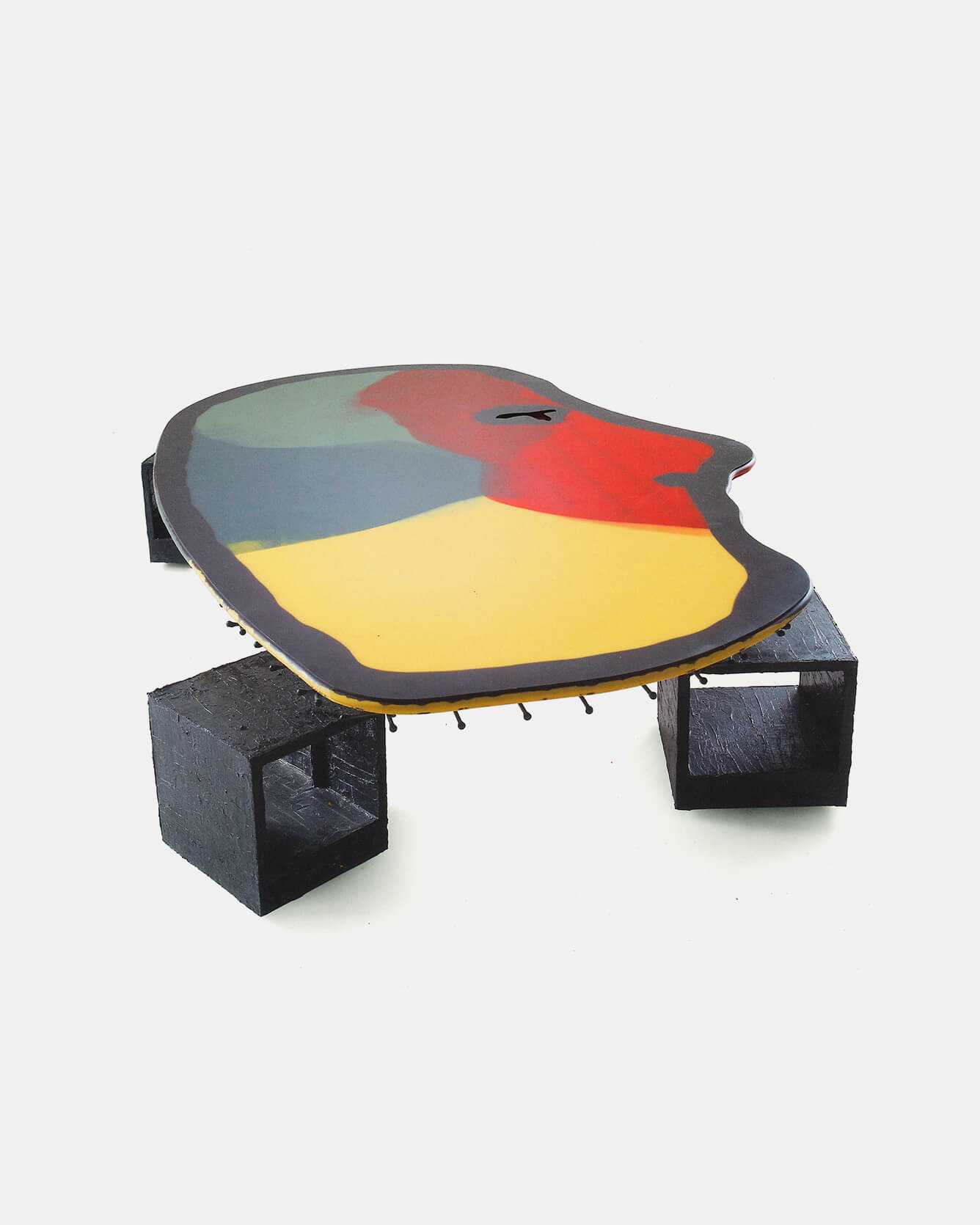
Gaetano Pesce’s Tavolone is one of the finest examples of Meritalia®’s long and meticulous production processes. With a colored resin top, this table embodies the uniqueness of an objet d’art and the practicality of a piece of furniture. The tabletop is made by casting resin that solidifies following the outlines of a human face motif, perfectly in line with Pesce’s emotional, experimental design language.
Materials
Colored Resin Top With Metal Structure
Dimensions
W 197cm ( 78” )
H 52cm ( 20” )
D 127cm ( 50” )

Gaetano Pesce
Gaetano Pesce was born 1939 in La Spezia, and from the outset his life unfolded in parallel with the social and political transformations that would shape his thinking. Educated in Venice during the fervent intellectual climate of the 1960s, Pesce developed a conviction that design must reflect the complexity, instability, and plurality of contemporary life. He rejected the modernist pursuit of neutrality and perfection, arguing instead that objects should carry emotion, narrative, and even contradiction. For Pesce, design was never merely about function or style; it was a cultural act, inseparable from the values and tensions of its time. Across architecture, furniture, and installation, Pesce forged a language that was unmistakably his own. He embraced industrial resins, foams, and plastics not as utilitarian shortcuts but as expressive tools capable of fluidity and spontaneity. His forms were often sensuous, asymmetrical, and saturated with color, deliberately resisting repetition. As a thinker and maker, Pesce championed individuality above all. He believed that variation was a fundamental expression of freedom.
Learn More